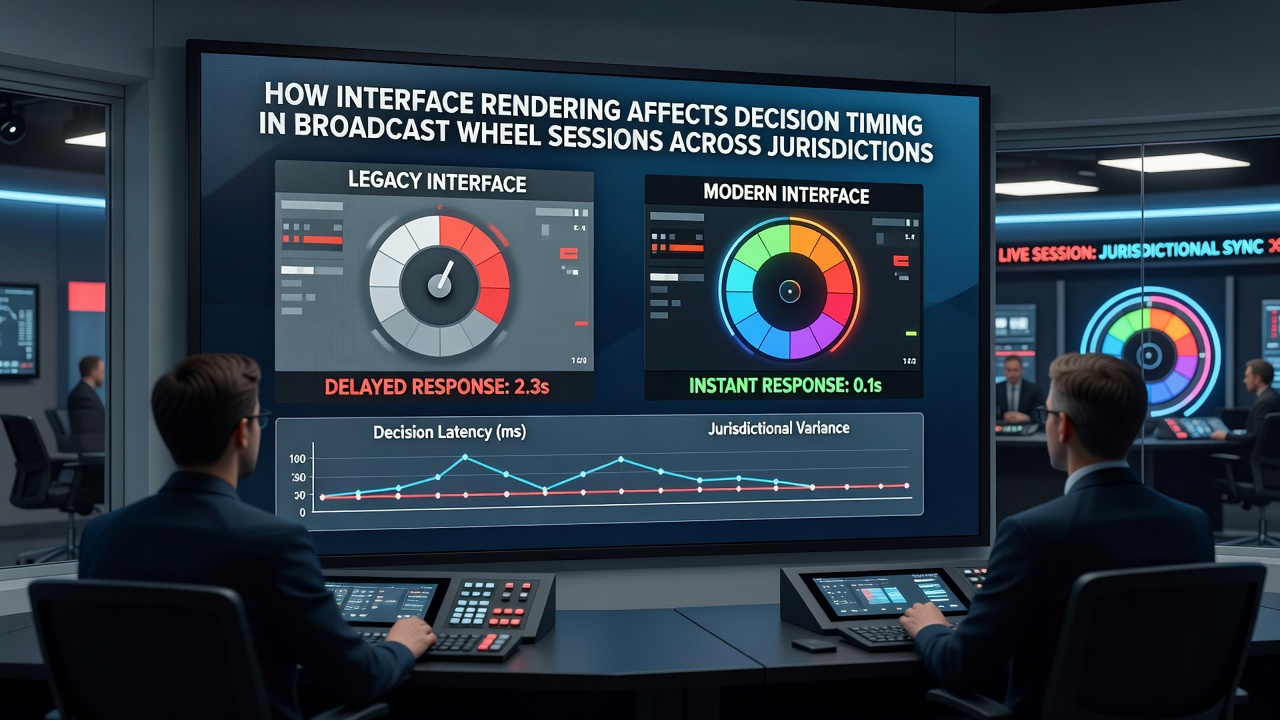
How Interface Rendering Shapes Decision Timing in Broadcast Wheel Sessions Across Jurisdictions
Interface rendering determines how quickly visual elements appear on screen during broadcast wheel sessions, and this technical factor directly influences the window available for player decisions in live wheel formats. Data from multiple regulatory regions shows measurable differences in average decision intervals tied to rendering speeds, with variations linked to hardware standards, streaming protocols, and local compliance rules. Observers note that slower rendering often extends the time between spin outcomes and betting closures, while optimized systems compress those intervals through reduced latency in asset loading and animation playback.
Technical Foundations of Rendering in Wheel Broadcasts
Broadcast wheel sessions rely on layered rendering pipelines that combine video feeds with overlaid betting interfaces, and each layer introduces potential delays measured in milliseconds. Research indicates that frame delivery rates below 60 frames per second correlate with extended decision windows because players wait for confirmation of wheel positions before finalizing selections. Those who have examined platform logs across jurisdictions report that compression algorithms used in different regions produce distinct latency profiles, with some markets requiring additional buffering to meet content verification standards.
Engineers at major streaming providers adjust rendering priorities based on regulatory mandates, and these adjustments alter how quickly interactive elements become active after each wheel result. In regions enforcing strict visual integrity checks, extra processing steps extend the interval before players receive updated odds displays, which in turn shifts the rhythm of betting activity.
Jurisdictional Differences in Rendering Requirements
Regulatory frameworks in North America and Europe impose varying specifications on interface performance, and these rules affect decision timing patterns in measurable ways. The Alcohol and Gaming Commission of Ontario has documented cases where mandated anti-tampering overlays added 120 to 180 milliseconds to rendering cycles, leading operators to recalibrate timing buffers in their broadcast systems. Australian state regulators, meanwhile, have focused on bandwidth allocation rules that prioritize stable frame delivery over rapid interface updates, producing different average response intervals compared with North American platforms.
November 2026 saw several Canadian provinces update their digital gaming guidelines to include explicit latency thresholds for live dealer interfaces, and early compliance reports suggest these thresholds have narrowed decision windows in affected sessions. Operators in those provinces responded by deploying edge rendering nodes closer to end users, which reduced the time required for wheel outcome graphics to stabilize before betting reopened.
Empirical Patterns in Decision Timing Data
Platform analytics collected over multi-month periods reveal consistent correlations between rendering quality and player action timing across borders. Sessions delivered through high-efficiency rendering stacks show tighter clustering of bet placements within the first three seconds after wheel stops, whereas sessions with heavier overlay processing exhibit broader distribution of decision points stretching closer to closure deadlines. Industry reports from the Nevada Gaming Control Board highlight similar distributions when comparing in-state versus cross-border broadcast feeds.

One study released by researchers at the University of Nevada, Las Vegas tracked session logs from licensed operators and found that a 100-millisecond improvement in interface rendering corresponded to a 7 percent increase in bets placed before mid-interval cutoffs. The same analysis noted that these timing shifts remained stable across different wheel variants, suggesting the effect stems primarily from interface mechanics rather than game rules alone.
Operational Adjustments by Operators
Operators respond to rendering constraints by modifying asset compression, pre-loading sequences, and client-side caching strategies, and these changes produce observable shifts in decision timing across jurisdictions. In markets with stricter data residency rules, local rendering farms replace centralized cloud processing, which shortens the interval between outcome generation and player notification. European operators subject to cross-border data flow restrictions have adopted hybrid models that balance compliance with performance, resulting in decision timing profiles that sit between those seen in North American and Asia-Pacific deployments.
Platform teams continue to test incremental rendering improvements because even small reductions in latency can alter the proportion of decisions made under time pressure. Figures released by trade associations indicate that jurisdictions permitting adaptive bitrate streaming without additional verification layers achieve faster average decision cycles than those requiring fixed verification steps before each interface update.
Conclusion
Interface rendering operates as a measurable variable in broadcast wheel sessions, and its effects on decision timing appear consistently across regulatory environments when comparable data sets are examined. Jurisdictional requirements shape the technical choices available to operators, which in turn determine how quickly players receive actionable visual information after each wheel outcome. Continued monitoring by regulatory bodies and academic researchers will clarify the extent of these timing relationships as rendering technologies evolve in line with updated compliance standards.