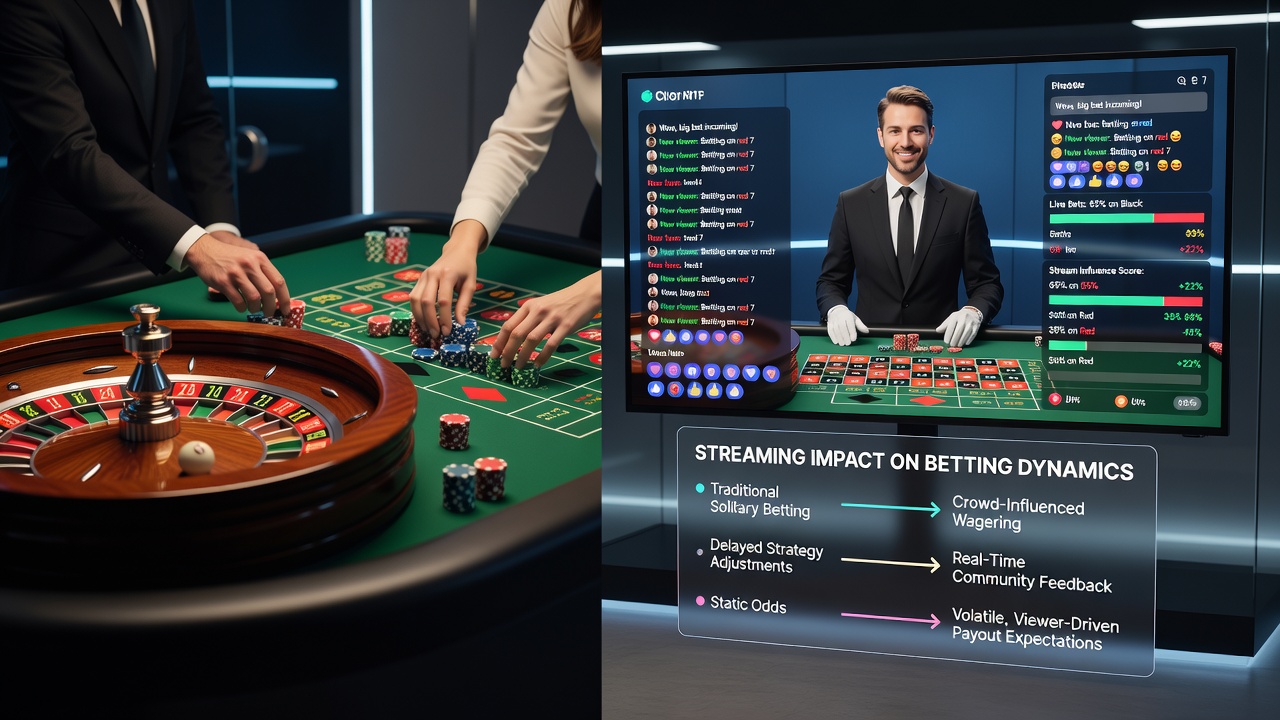
Live Streaming's Influence on Betting Patterns in Wheel-Based Casino Games
Wheel-based table games such as roulette have long relied on physical presence and fixed betting windows yet live streaming platforms have introduced continuous access that shifts how participants place wagers and monitor outcomes. Data from industry reports indicate that streaming services now connect remote viewers to dealer actions in real time which allows adjustments during spins rather than pre-commitment only. Observers note that this format expands the pool of active bettors across time zones while traditional casino floors maintain their core structure of chip placement and wheel rotation.
Expansion of Access Through Broadcast Technology
Traditional approaches centered on in-person observation of wheel speed and ball trajectory gave way once cameras captured every detail and transmitted it globally. Viewers can now follow multiple wheels simultaneously through split-screen feeds which supports comparative analysis during the same betting round. Research from the University of Nevada Reno Center for Gambling Research shows participation rates in streamed wheel games rose steadily between 2023 and 2025 as mobile connections improved. By August 2026 several platforms plan to integrate augmented overlays that display historical spin data alongside the live wheel which further compresses decision time for participants.
Adjustments in Strategy and Timing
Betting sequences once planned in advance now incorporate live statistics pulled directly from the stream such as recent number distributions and dealer tendencies. Players often switch from fixed systems like Martingale to dynamic adjustments when the feed reveals patterns not visible in static records. Those who studied early adoption cases found that live chat features encourage group discussion of next moves while the wheel spins which alters the solitary nature of classic table play. A report issued by the Nevada Gaming Control Board highlights increased volume of in-play wagers on streamed roulette tables compared with non-streamed equivalents during the same period.
Because streams operate continuously without physical table resets some operators introduced shorter betting intervals that keep pace with viewer attention spans. This change compresses the classic pause between spins and requires participants to finalize selections faster than in land-based settings.

Regulatory and Operational Shifts Across Regions
Regulatory bodies have responded by updating licensing requirements for streamed content. The Malta Gaming Authority introduced guidelines in 2024 that mandate transparent display of wheel integrity checks during broadcasts while Australian state regulators examined cross-border data flows tied to live wheel feeds. These measures aim to maintain fairness standards that traditional venues already enforce through on-site oversight. Industry associations such as the European Gaming and Betting Association track how streaming affects responsible gaming tools with several operators adding session timers visible on the same screen as the wheel.
Player Behavior and Market Data Trends
Market figures reveal that average session lengths on live-streamed wheel games exceed those recorded at physical tables by notable margins according to aggregated operator reports. Participants frequently place smaller incremental bets because the stream interface allows rapid re-entry after each outcome. Observers tracking these patterns note that social features embedded in streams create secondary communities where strategies circulate in real time yet core probabilities remain governed by the same wheel mechanics used for decades. One case study from Canadian provincial gaming data illustrated how cross-platform betting increased during major sporting events when live wheel streams ran alongside other broadcasts.
Conclusion
Live streaming continues to integrate with wheel-based table games by extending reach and compressing decision cycles without replacing the underlying random mechanics. Regulatory updates and operational adjustments keep pace with these developments while market data continues to document evolving participation patterns. The combination of visual access and interactive tools produces measurable differences in how wagers are timed and sequenced compared with earlier in-person models.